
Autumn wanderings
Hemingway and Stevens and two new books from friends

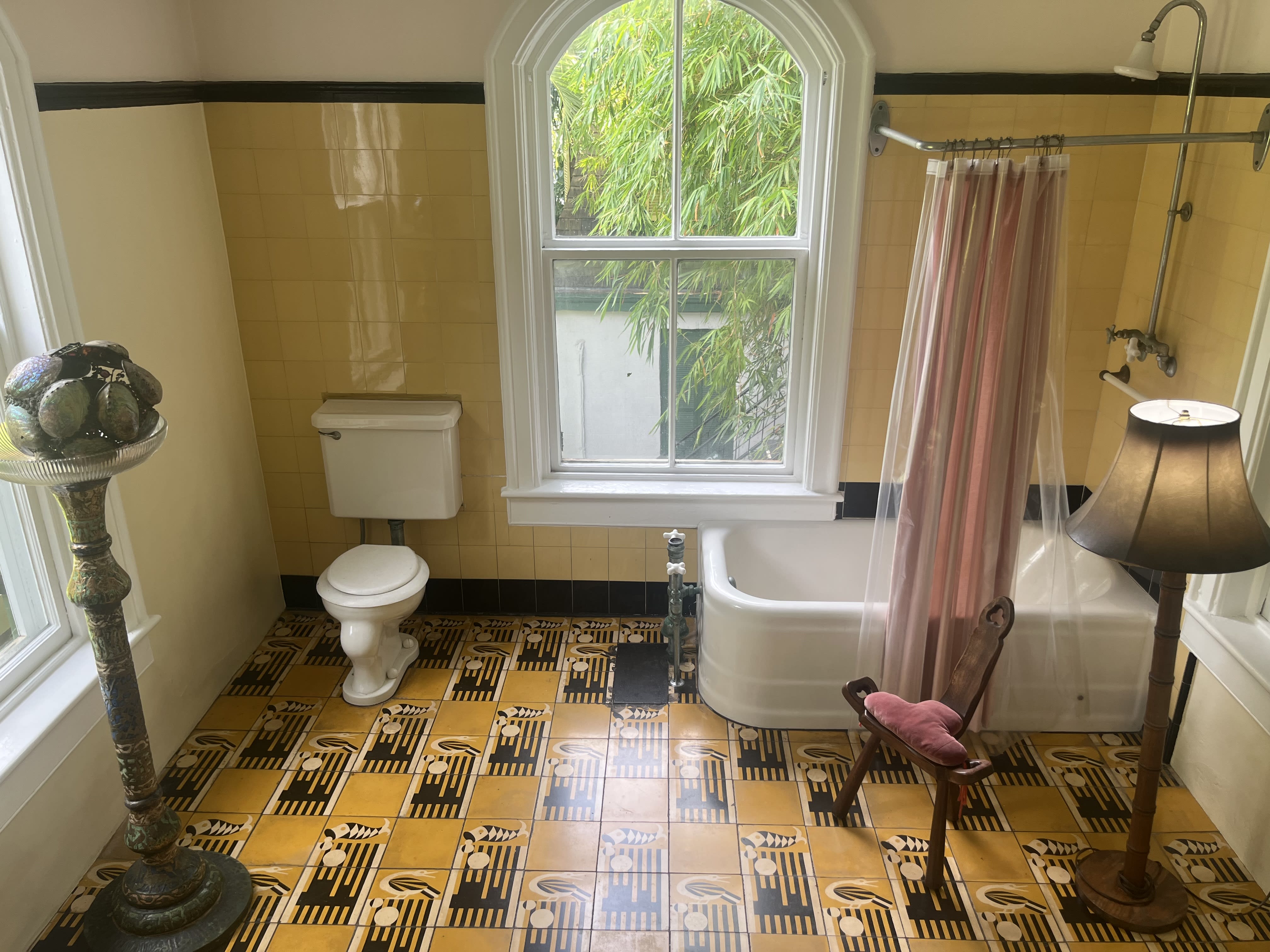
I’m in Key West, enjoying a monthlong residency. I’ve made peace with the party atmosphere of the town and am delighting in all the beauty and wildlife here, as I work hard on new projects.
However commodified it may be, the cultural history here feels made for me: Ernest Hemingway, who had a house in Key West, was a favorite writer of mine as a teenager, and Wallace Stevens (a big hint about my love for his poetry has been present on this site from the start) also spent time here. The Idea of Order at Key West is one of those poems you could read every day for a month and not tire of.
Apparently Stevens and Hemingway had a scuffle here and Hemingway knocked him out. It’s hard for me to imagine a belligerent Wallace Stevens. But that he got into a fistfight in Key West makes me think that I should go out and drink one night before I leave. I have seriously soured on alcohol as I’ve gotten older but maybe it’s worth a hangover to see if any literary spirits come alive for me in drunkenness. James Merrill had a house here and of course Tennessee Williams did too — two more writers I loved in my teens and early 20s.
Not being in New York, I had to miss book launches of two friends: P.E. Moskowitz’s Breaking Awake, about the role of drugs in their life and in American life, and Jacob Silverman’s Gilded Rage, about the tech world’s turn to the right. I’ve only had time to peek at their books, but feel confident in recommending them — I am a longtime reader of their journalism and they are both brilliant. P.E. writes a wonderful Substack that I love in part for the way it integrates challenging psychoanalytic ideas with progressive politics. Jacob has a less-active Substack but publishes widely on crypto, corruption, and Silicon Valley. Both are incredible writers who explore our reality with depth and are also very funny.

Being away from my usual daily life allows me to distance myself from the flow of news and gossip and to return, through my creative work, to public concerns and psychological dynamics which have barely changed in thousands of years. Of course we live in a social reality and can’t bracket news (or gossip) all the time; but being away brings home to me how oversaturated I am with the latest micro-scandals and micro-tragedies. Almost everything in our culture evaporates in a few days — even Charlie Kirk’s murder seems to have mostly faded in just a few weeks’ time. There is no need to keep up with every cultural twist and turn, even if our phones are seducing us into believing otherwise. And of course much of the world now just lives on the phone, which adds an anxiety about being “out of touch” if we are to put our devices down.
But we should. This is by now a totally banal observation, but real life doesn’t happen on our phones; it happens inside of us, as we navigate the internal and external challenges that have confronted the human psyche from the start, and will confront us for as long as we live, no matter how tragic or blessed our lives are. The less we consciously address these inner and outer challenges, the more likely it is we will get fully swept up into digital reality — a death before dying.
D.W. Winnicott wanted to be present for his own death — “Oh God! May I be alive when I die” he wrote. Who knew just a half century later we’d need to adjust his prayer to apply to life too?