
March wanderings
The Shining and more Shining

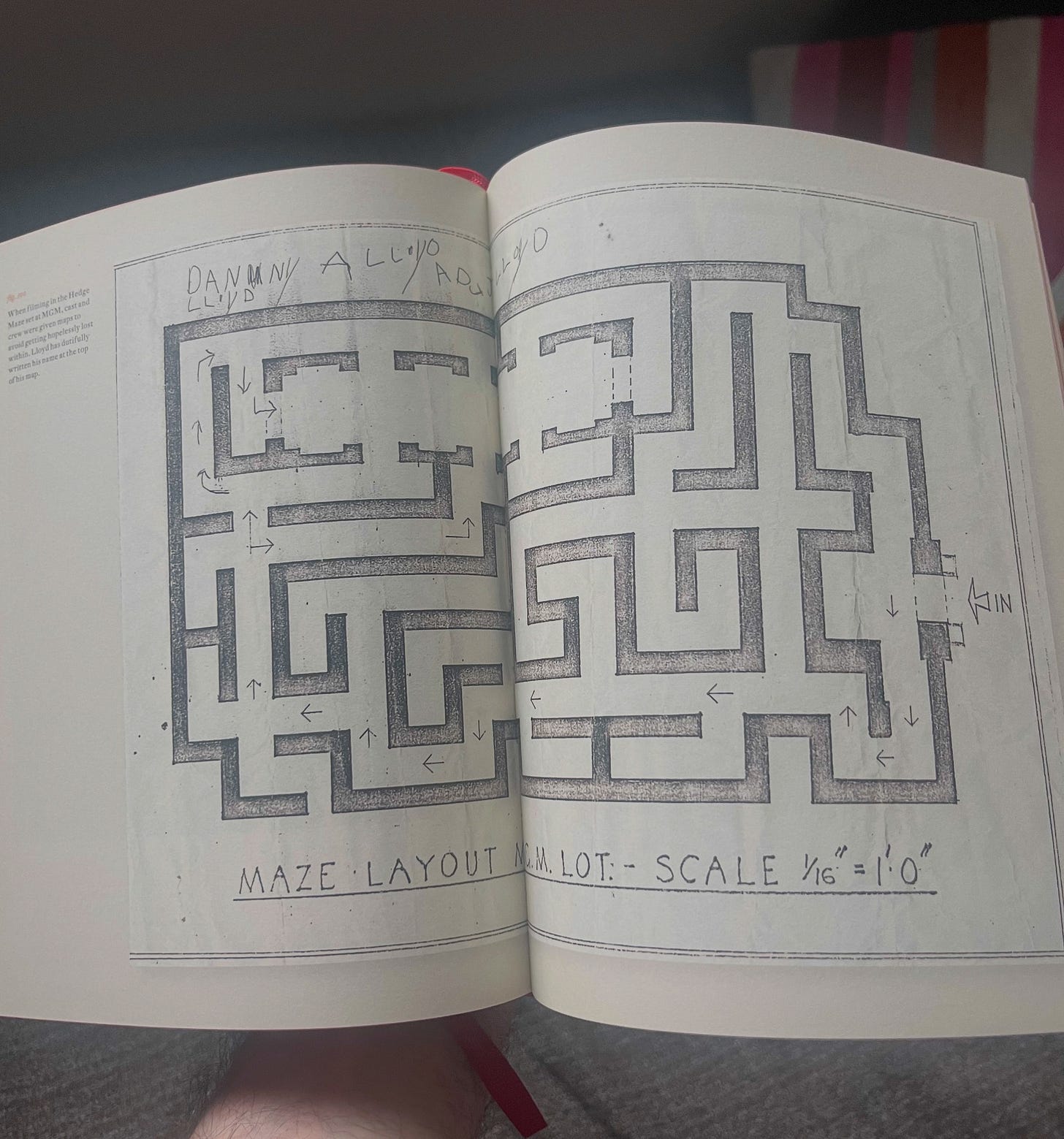
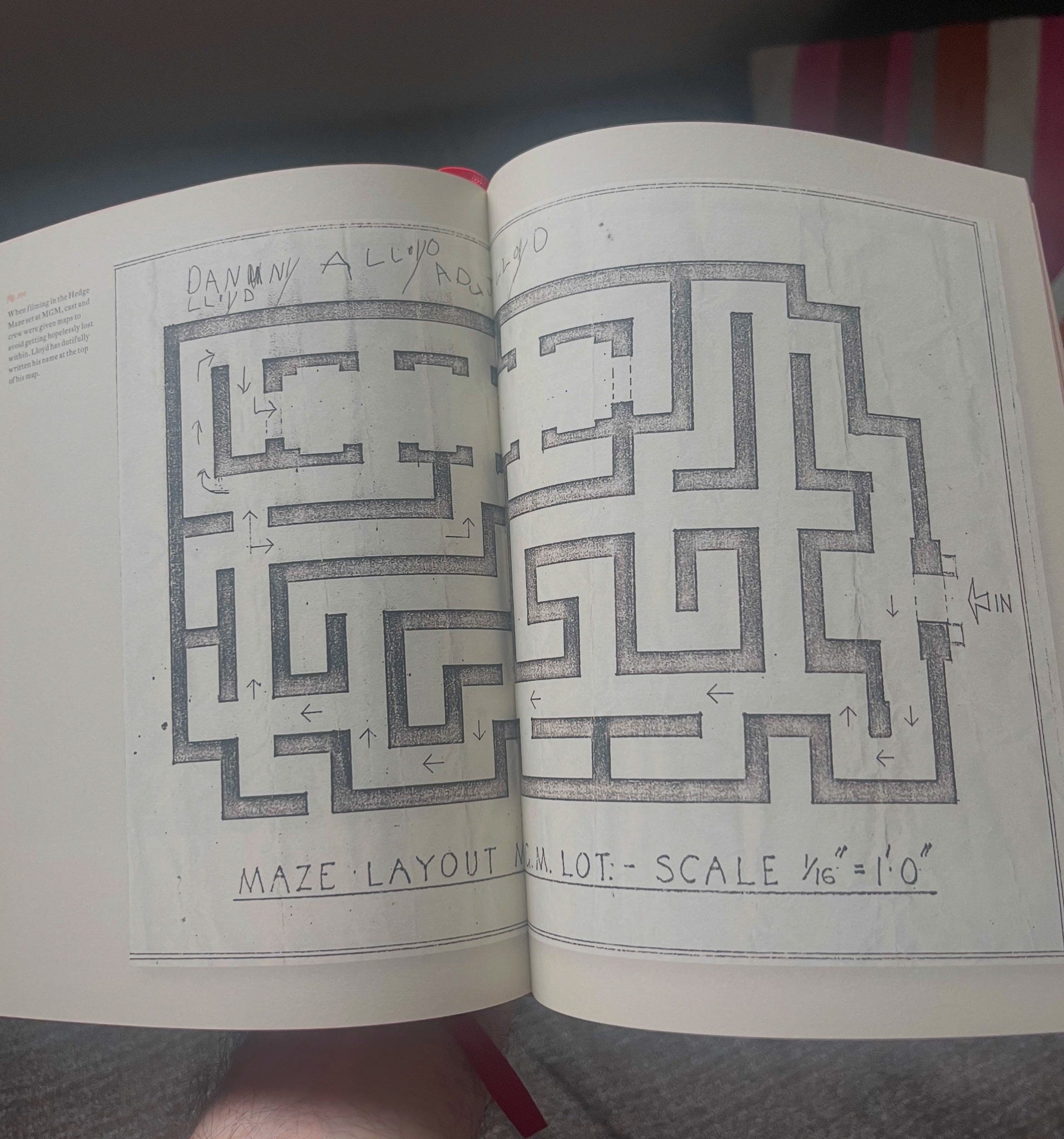
My Christmas present to myself finally arrived earlier this month: J.W. Rinzler’s and Lee Unkrich’s Stanley Kubrick’s The Shining, from Taschen. The Shining is one of the few movies that feels utterly clear to me yet still full of mystery and novelty (some others are The Nights of Cabiria, Persona, Eyes Wide Shut, A.I.). The book is a massive two-volume set and I’m just beginning my way through the maze. There’s a melancholy tinge each time I crack it open — how lucky Kubrick was to work when he did, to have the time and resources he needed to realize such a deep vision. Even if this was never exactly common, today it feels impossible. There may be hacks for spending less money, but there is no hack for having less time…
Fortuitously, stand-up comedian and filmmaker Raanan Hershberg invited me onto his podcast Your Favorite Movie Sucks and when I sent him a few options, he picked The Shining. Previously, I had a fun conversation with Raanan about the differences between stand-up and theatre, and this was another enjoyable one. Squint and you can make out the contours of an essay on the movie I’ll likely never write — about what we do, and don’t do, with inner and outer perceptions that cause us distress. (The YouTube below cuts off about half an hour of our chat — to access the whole thing, you’ll have to shell out for Raanan’s Patreon.)
J. Oliver Conroy’s piece about the Zizians was March’s top longread for me. This portrait of a tech-obsessed vegan cult put me in mind of a thinker who seriously impacted my life a few decades ago: Janine Chasseguet-Smirgel, a French psychoanalyst who carved out a space critical of Lacan and Reich and used Freudian metapsychology to trace the universal human temptation to perversion, regression, short cuts. Conroy’s piece gestures towards her ideas — near the end, he passingly refers to “Oedipal rage” as a motivating factor in the cult’s rebellion. Such an idea is not popular now (not even in psychoanalysis — some of Chasseguet-Smirgel’s ideas are reactionary by today’s standards). My personal experience suggests there’s something deeply true about her core concerns. Reality is difficult and presents us with just a few options: work with it despite its frustrations and challenges, destroy it out of entitlement and resentment, or fantasize impossible alternatives to it (and, of course, combinations of these). Our psyches constantly grapple with and against reality — this struggle accounts for creative innovations and painstaking achievements as well as fantasies, illusions, and delusions. Conroy’s piece made me think about the differences between a “good-enough” group and a pathological cult. The beauty of real intimacy is that others’ differences offer us the opportunity to confront our psychic retreats and build an authentic community based on relatedness; the danger of false intimacy is that we may build our psychic retreats out into reality via the participation of others, making our delusions dangerously, sometimes catastrophically, “real.”

Black Bag is David Koepp’s and Steven Soderbergh’s second collaboration in the last few months, and while very different from Presence — a drama about the mysteries of space, time, and consciousness, told from the point of view of a ghost — it shares with it a play-like fondness for long, intimate scenes in a compressed running time. Black Bag is a spy thriller the way Presence was a ghost story — the genre is there, but it’s secondary to what’s really on the filmmakers’ minds. Black Bag is about lying and suggests, paradoxically, that the more aware we are of everyone’s capacity for deceit, the more freely we can trust. The movie is a trifle in a way. so I don’t want to overstate its achievements, but it does have something on its mind. It’s rare for me today to feel that an artist is working through something with the story they’re telling. This is a special thing, in part because it is inherently interesting but mostly because it’s intimate: I am sharing with you something I think deeply about in the privacy of my mind. I like when art is a true journey into the inner world of its creator. Most stuff today feels like a presentation. Black Bag is an invitation.


"...the universal human temptation to perversion, regression, short cuts."
Do you have any suggestions for cursory, introductory reading on this topic?